
P-03 / Injection molding
Contract injection molding
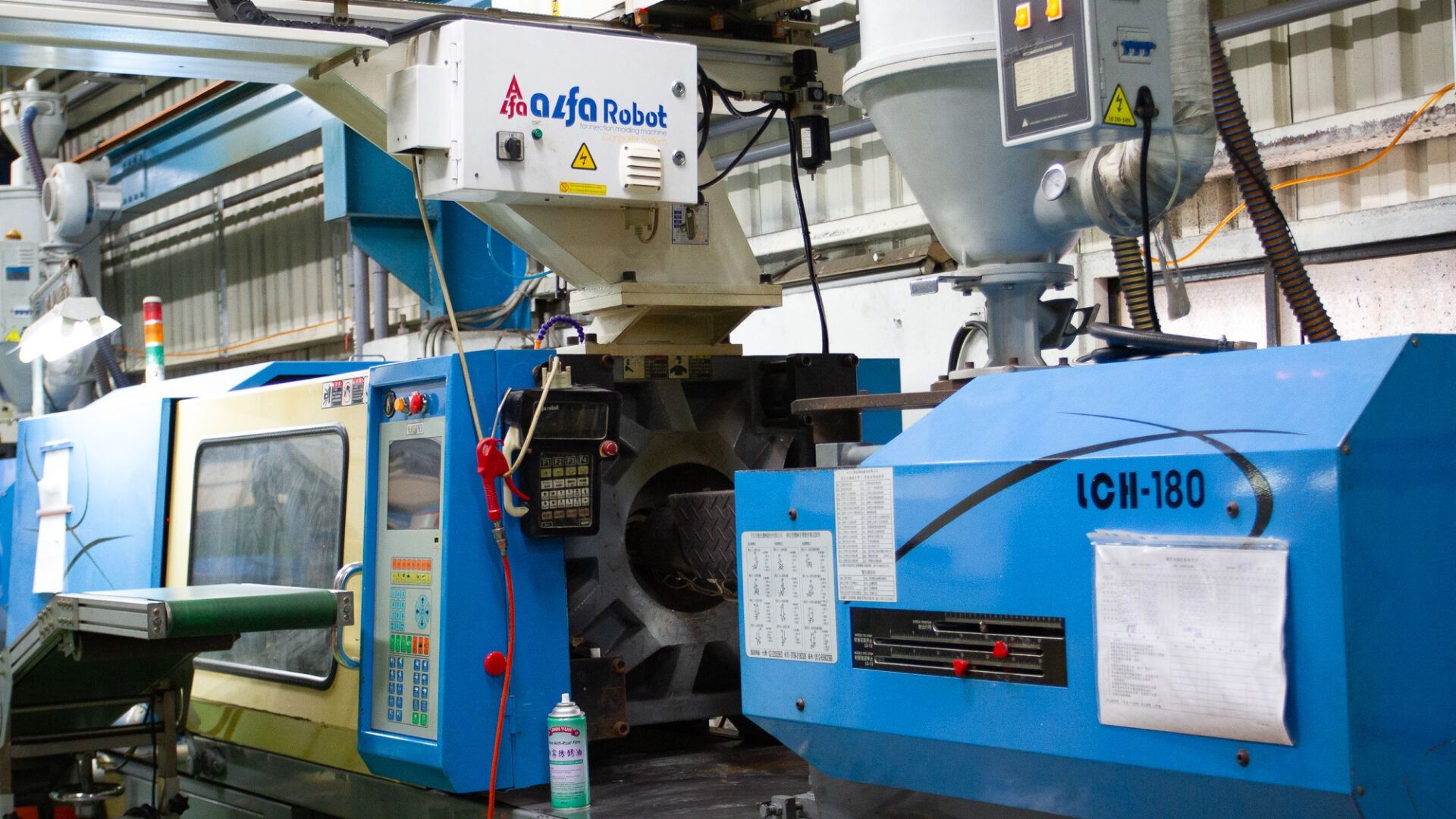
Contract plastic injection molding: 10 presses, 80 to 850 tons
Chang-Hao offers contract plastic injection molding on 10 presses: one 80-ton, two 100-ton, one 140-ton, one 180-ton, one 260-ton, one 280-ton, one 500-ton and two 850-ton machines.
A project starts with your sample or drawing and goes through confirmation, quotation, mold making, trial and sample approval before production and shipment, 12 steps in all.
By 昌昊興業 (Chang-Hao) · Updated
01 / Cycle
The six steps of an injection cycle
On the press, a mold repeats the same six steps again and again: clamping, injection, packing, cooling, opening and ejection. Each cycle produces one shot of parts.
The moving platen closes the core and cavity halves and holds them shut. The press tonnage must exceed the force injection pressure exerts to open the mold, or plastic escapes at the parting line as flash.
The screw moves forward and pushes molten plastic from the front of the barrel through the nozzle and sprue into the cavity.
Once the cavity is full, the screw keeps pressure on the melt to make up for shrinkage as it cools, reducing sink marks and dimensional variation.
Water circulating through the mold’s cooling lines draws out heat until the part solidifies. Meanwhile the screw rotates and retracts, melting pellets from the hopper for the next shot.
The moving platen retracts. The part stays on the core and leaves the cavity with it.
Ejector pins push the part off the core. The mold closes again and the next cycle begins.
02 / Part size
How large a part can each press mold?
During injection the plastic pushes the mold halves apart, and the press tonnage has to be greater than that push; the tonnage needed is roughly the projected area of the part times a force per unit area. The table uses the values recommended in resin makers’ processing guides (the upper value where a range is given) to estimate the largest projected area for each press size at Chang-Hao.
| Press tonnage | Presses | PP | ABS | PC/ABS | PC |
|---|---|---|---|---|---|
| 80 t | 1 | 284 | 189 | 113 | 113 |
| 100 t | 2 | 355 | 237 | 142 | 142 |
| 140 t | 1 | 497 | 331 | 199 | 199 |
| 180 t | 1 | 640 | 426 | 256 | 256 |
| 260 t | 1 | 924 | 616 | 369 | 369 |
| 280 t | 1 | 995 | 663 | 398 | 398 |
| 500 t | 1 | 1,777 | 1,185 | 711 | 711 |
| 850 t | 2 | 3,022 | 2,014 | 1,208 | 1,208 |
Example: an ABS part on a 850-ton press can have a projected area of up to about 2,014 cm², roughly a square 44.9 cm on each side.
Calculated per square inch: PP 2 tons as the normal estimating factor (INEOS; parts with integral hinges need at least 4 to 6 tons), ABS 3 tons as the upper value (SABIC), PC 5 tons as the upper value (Bayer, now Covestro). The guides state “tons”; this site converts them to metric tons as US short tons (907 kg). SABIC’s PC/ABS processing guide states that wall thickness, flow length and molding conditions determine the tonnage actually required.
Enter your part size: press tonnage estimator03 / Workflow
Contract molding in 12 steps, from sample to shipment
Chang-Hao runs contract molding in these 12 steps; after the trial, the customer reviews and approves the samples before production starts.
- 01
Sample or drawing
Receive the customer’s sample or drawing and define the part requirements.
- 02
Confirmation
Confirm molding details and customer requirements in a checklist.
- 03
Quotation
Estimate cost and material needs and provide a development cost estimate.
- 04
Material and scheduling
Prepare material and set the production schedule.
- 05
Mold making
Build the mold to the confirmed design.
- 06
Quality check
Run a mold trial and check the first parts against expectations.
- 07
Texturing and corrections
Texture the mold and make corrections.
- 08
Customer review
The customer reviews.
- 09
Sample approval
The customer approves the molded samples as meeting requirements.
- 10
Production
After the trial and sample approval, regular production starts.
- 11
Production complete
After inspection and adjustment, the batch is completed.
- 12
Shipment
Pack and ship to the customer’s requirements, on time.
04 / Products
Injection molded products
Chang-Hao currently makes ten product groups:
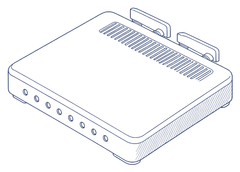 Networking equipment housings
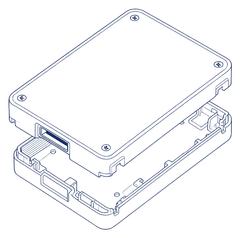 Plastic parts for computer, communications and consumer electronics peripherals
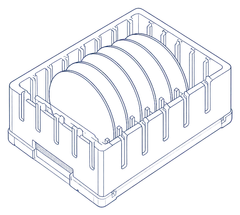 Semiconductor-related parts
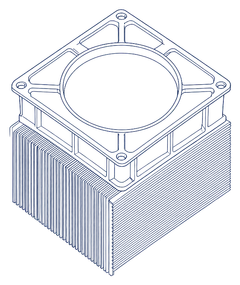 Thermal module housings
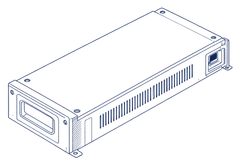 BBU (battery backup unit) modules
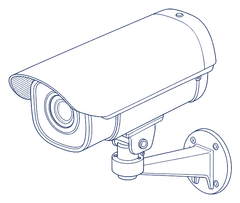 Surveillance camera housings
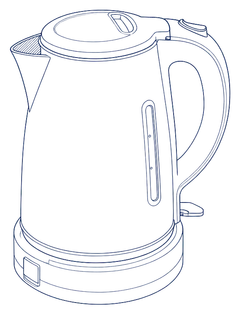 Home appliance housings
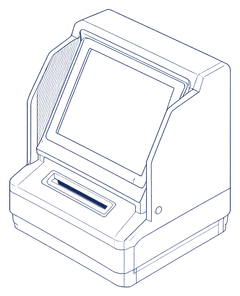 Voting machine housings
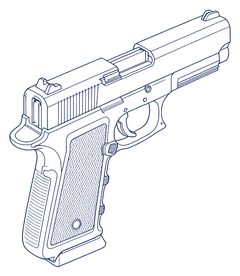 Pistol housings
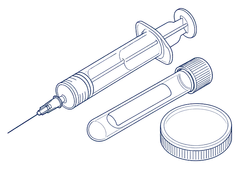 Medical consumables
FAQ
Contract molding questions
- What is Chang-Hao’s largest press?
- 850 tons; there are two of them. The smallest is one 80-ton press, and the plant has 10 presses in total.
- How large a part can an 850-ton press mold?
- Using the upper recommended value for ABS, a projected area of up to about 2,014 cm², roughly a 45 cm square; wall thickness, flow length and molding conditions also matter.
- Where does a contract molding project start?
- With your sample or drawing, followed by confirming details, quoting, then material preparation and scheduling.
- Are samples approved before production?
- Yes. After the trial the customer reviews and approves the samples, and only then does production start.
Send a sample or drawing for a quote
Please send a sample or drawing of your part. We confirm the details and then send a quote.